Ahmad Nawab Yousufy
Web Development | IT Solutions | Motion Graphics | Industry Insights
Exploring Technology, Creativity & Digital Innovation
Welcome to my blog section, where I share insights, experiences, and practical knowledge from the worlds of technology, web development, IT infrastructure, and creative design. From technical tutorials and industry trends to creative ideas and digital innovations, these articles are designed to inspire learning, share expertise, and explore modern digital solutions.
Explore My Blogs
Dive into a collection of insights, tutorials, and creative ideas focused on modern technology and digital innovation. From full stack development and IT infrastructure to motion graphics and creative design, these articles reflect my passion for sharing knowledge, exploring new trends, and helping others grow in the ever-evolving digital world. Whether you are a developer, technology enthusiast, or creative professional, you’ll discover valuable content designed to inspire, educate, and spark new ideas.
Top Cybersecurity Practices Every Organization Should Follow
As businesses continue to embrace digital transformation, cybersecurity has become one of the most critical aspects of organizational success. From small businesses and NGOs to multinational enterprises and government institutions, every organization stores valuable information that must be protected against cyber threats.
Cybercriminals are becoming more sophisticated every year, using advanced techniques to steal sensitive data, disrupt operations, and demand financial payments through ransomware attacks. A single security incident can lead to financial losses, reputational damage, legal consequences, and loss of customer trust.
Building a strong cybersecurity strategy is no longer optional—it is an essential investment for protecting business operations and ensuring long-term sustainability.
Understanding Today’s Cyber Threats
Modern organizations face a wide range of cybersecurity risks. These threats target networks, computers, cloud services, mobile devices, and even employees through social engineering.
Some of the most common cyber threats include:
- Phishing and email scams
- Malware and ransomware attacks
- Data breaches
- Password attacks and credential theft
- Insider threats
- Distributed Denial-of-Service (DDoS) attacks
- SQL Injection
- Cross-Site Scripting (XSS)
- Zero-day vulnerabilities
- Cloud security misconfigurations
Understanding these threats is the first step toward developing an effective defense strategy.
1. Use Strong Password Policies
Weak passwords remain one of the leading causes of security breaches. Organizations should require employees to create unique, complex passwords that include uppercase and lowercase letters, numbers, and special characters.
Password managers can help users generate and securely store strong passwords, reducing the temptation to reuse credentials across multiple systems.
2. Enable Multi-Factor Authentication (MFA)
Multi-Factor Authentication adds an additional layer of security by requiring users to verify their identity using more than just a password.
Common authentication methods include:
- Authentication apps
- Security keys
- SMS verification codes
- Biometric authentication
- Email verification
Even if a password is compromised, MFA significantly reduces the likelihood of unauthorized access.
3. Keep Systems and Software Updated
Software vendors regularly release updates that fix newly discovered security vulnerabilities. Delaying updates leaves systems exposed to known exploits.
Organizations should:
- Enable automatic updates where appropriate.
- Regularly patch operating systems.
- Update web applications and plugins.
- Maintain current antivirus software.
- Upgrade network equipment firmware.
Timely updates are among the simplest and most effective cybersecurity measures.
4. Educate Employees About Cybersecurity
Technology alone cannot prevent every cyberattack. Employees are often the first line of defense.
Regular cybersecurity awareness training should cover topics such as:
- Identifying phishing emails
- Safe internet browsing
- Password best practices
- Secure file sharing
- Social engineering tactics
- Reporting suspicious activities
Well-informed employees are far less likely to fall victim to cybercriminals.
5. Protect Your Network
A secure network forms the backbone of any organization’s IT infrastructure.
Essential network security measures include:
- Firewalls
- Secure Wi-Fi configurations
- Virtual Private Networks (VPNs)
- Network segmentation
- Intrusion Detection and Prevention Systems (IDS/IPS)
- Secure DNS services
Continuous network monitoring helps detect unusual activity before it becomes a major incident.
6. Perform Regular Data Backups
Data loss can result from cyberattacks, hardware failures, accidental deletion, or natural disasters.
Organizations should implement a reliable backup strategy by:
- Scheduling automatic backups.
- Keeping multiple backup copies.
- Storing backups both on-site and off-site.
- Using encrypted backup storage.
- Regularly testing backup restoration.
A well-maintained backup system ensures business continuity during unexpected events.
7. Secure Web Applications
Organizations that operate websites or online services must prioritize application security.
Developers should follow secure coding practices such as:
- Input validation
- Output encoding
- Prepared SQL statements
- HTTPS encryption
- Role-Based Access Control (RBAC)
- Secure session management
- Cross-Site Request Forgery (CSRF) protection
- Cross-Site Scripting (XSS) prevention
Routine vulnerability assessments and penetration testing help identify weaknesses before attackers do.
8. Encrypt Sensitive Data
Encryption protects confidential information by making it unreadable to unauthorized users.
Organizations should encrypt:
- Customer information
- Employee records
- Financial documents
- Medical information
- Business communications
- Backup files
Encryption should be used both for data stored on devices and for data transmitted over networks.
9. Implement Access Control
Not every employee requires access to every system or file.
Applying the Principle of Least Privilege (PoLP) ensures users only have access to the resources necessary for their roles.
Access should be reviewed regularly, especially when employees change positions or leave the organization.
10. Develop an Incident Response Plan
Even with strong defenses, no organization is completely immune to cyber threats.
An incident response plan should define:
- How incidents are detected
- Who should be notified
- Steps to contain the attack
- Recovery procedures
- Communication with stakeholders
- Lessons learned after the incident
Having a documented response plan minimizes downtime and accelerates recovery.
Emerging Cybersecurity Trends
Cybersecurity continues to evolve as technology advances. Organizations should stay informed about emerging trends such as:
- Artificial Intelligence for threat detection
- Zero Trust Security Architecture
- Cloud-native security solutions
- Endpoint Detection and Response (EDR)
- Extended Detection and Response (XDR)
- Security Automation
- Identity and Access Management (IAM)
- Threat Intelligence Platforms
Adopting modern security technologies helps organizations remain resilient against evolving cyber threats.
Final Thoughts
Cybersecurity is a shared responsibility that involves technology, processes, and people. Organizations that invest in strong security practices are better equipped to protect sensitive information, maintain customer trust, and ensure uninterrupted business operations.
By implementing strong password policies, enabling Multi-Factor Authentication, keeping systems updated, educating employees, securing networks, protecting web applications, encrypting data, and preparing for potential incidents, organizations can significantly reduce their exposure to cyber threats.
As cyber risks continue to evolve, maintaining a proactive cybersecurity strategy will remain one of the most important investments any organization can make.

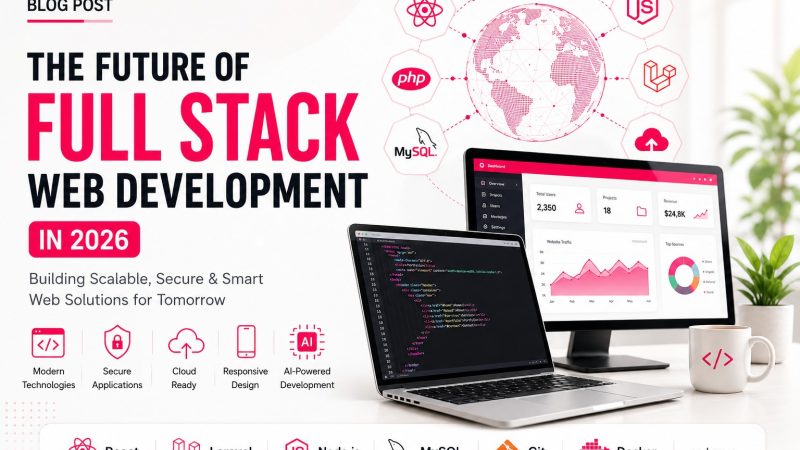
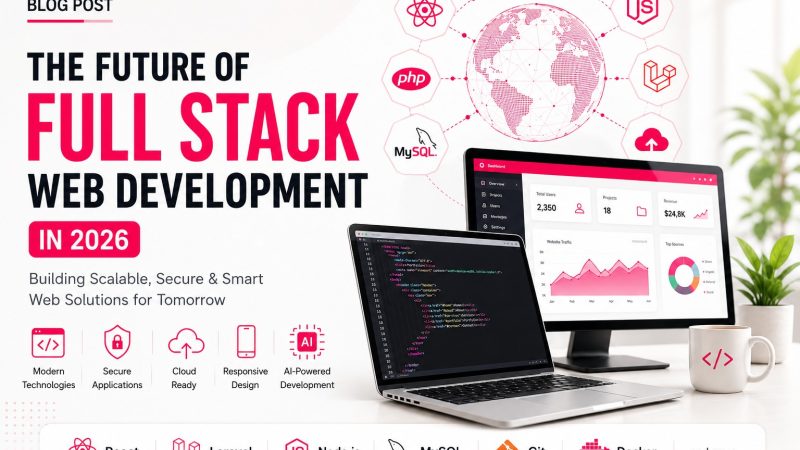
The Future of Full Stack Web Development in 2026
In today’s digital world, businesses rely heavily on web applications to deliver services, engage customers, and streamline operations. As technology continues to evolve, the role of the Full Stack Developer has become increasingly important. A Full Stack Developer possesses the knowledge and skills to build complete web applications, handling everything from the user interface to server-side logic, databases, APIs, and deployment.
What is Full Stack Web Development?
Full Stack Web Development refers to the ability to work on both the front-end and back-end of a web application. Front-end development focuses on creating responsive, interactive, and visually appealing interfaces that users interact with. Back-end development handles the server, database, authentication, business logic, and application performance.
A modern Full Stack Developer understands how these components work together to create secure, scalable, and high-performing digital solutions.
Technologies Driving Modern Web Development
The technology landscape continues to change rapidly, and developers need to stay updated with the latest tools and frameworks. Some of the most widely used technologies in 2026 include:
- React for building dynamic and interactive user interfaces.
- Laravel for developing secure and scalable PHP applications.
- Node.js for high-performance server-side JavaScript applications.
- RESTful APIs and GraphQL for efficient communication between applications.
- MySQL, PostgreSQL, and MongoDB for reliable data storage and management.
- Docker and Cloud Platforms for deployment, scalability, and application management.
- Git and GitHub for version control and collaborative software development.
These technologies enable developers to create applications that are fast, maintainable, and ready for future growth.
Why Businesses Prefer Full Stack Developers
Hiring a Full Stack Developer offers significant advantages for organizations. Instead of managing separate front-end and back-end teams for smaller or medium-sized projects, companies can benefit from a developer who understands the complete application architecture.
Some key advantages include:
- Faster project delivery.
- Better communication between different parts of the application.
- Cost-effective development.
- Easier maintenance and troubleshooting.
- Consistent coding standards throughout the project.
- Greater flexibility when project requirements evolve.
This versatility makes Full Stack Developers valuable members of startups, NGOs, government organizations, and enterprise businesses alike.
The Growing Importance of Security
As cyber threats continue to increase, security has become a fundamental part of web development. Modern applications must protect user data, prevent unauthorized access, and comply with industry standards.
Developers should implement best practices such as:
- Secure authentication and authorization.
- Input validation and output sanitization.
- HTTPS encryption.
- Password hashing.
- Cross-Site Request Forgery (CSRF) protection.
- SQL injection prevention.
- Regular software and dependency updates.
Building security into every stage of development helps reduce risks and strengthens user trust.
Artificial Intelligence is Changing Development
Artificial Intelligence is transforming the software development process. Developers now use AI-powered tools to generate code suggestions, automate testing, create documentation, identify bugs, and improve application performance.
Rather than replacing developers, AI acts as a productivity assistant, allowing teams to spend more time on architecture, innovation, and solving complex business problems.
User Experience Remains a Priority
A successful web application is not only functional but also easy to use. Users expect websites that are fast, responsive, and accessible on every device.
Key principles of modern user experience include:
- Mobile-first responsive design.
- Fast page loading speeds.
- Clear navigation.
- Accessibility for users with disabilities.
- Clean and consistent interfaces.
- Optimized performance.
A well-designed user experience improves customer satisfaction, engagement, and search engine visibility.
Continuous Learning is Essential
Technology evolves continuously, introducing new frameworks, tools, and best practices. Successful developers invest in continuous learning through online courses, certifications, technical blogs, open-source contributions, and real-world projects.
Keeping skills current enables developers to build better applications and adapt to changing business needs.
Looking Ahead
The future of Full Stack Web Development is filled with exciting opportunities. As cloud computing, artificial intelligence, automation, and cybersecurity continue to advance, Full Stack Developers will play an even more critical role in building reliable digital solutions.
Organizations increasingly seek professionals who can combine technical expertise with problem-solving abilities to create secure, scalable, and user-focused applications. By mastering modern technologies, following industry best practices, and embracing lifelong learning, developers can build successful careers while helping businesses thrive in an increasingly digital world.
Why Every Business Needs a Professional Website
In today’s digital world, a professional website is no longer optional—it’s one of the most valuable assets a business can have. Whether you’re a startup, a local shop, a consultancy, or a large organization, your website serves as your digital storefront, representing your brand 24/7.
A well-designed website builds trust, attracts potential customers, and creates opportunities for business growth. Here are some of the key reasons every business should invest in a professional website.
1. Build Trust and Credibility
Your website is often the first interaction potential customers have with your business. A clean, modern, and professional design creates a positive first impression and helps establish credibility.
A professional website should include:
- Company information
- Products and services
- Customer testimonials
- Contact details
- Secure browsing (HTTPS)
When visitors trust your business, they are more likely to become customers.
2. Increase Sales and Generate Leads
A website works around the clock, allowing customers to discover your products and services anytime, from anywhere.
By including:
- Contact forms
- Online booking systems
- Product catalogs
- Calls-to-action (CTAs)
you can convert visitors into qualified leads and paying customers.
3. Expand Your Market Reach
Unlike a physical office or store, a website has no geographical boundaries. It enables your business to reach customers across cities, countries, and even internationally.
With effective SEO (Search Engine Optimization), your website can appear in search engine results when people are looking for the services you provide.
4. Stay Available 24/7
Your business may close at the end of the day, but your website remains available.
Customers can:
- Learn about your services
- Browse products
- Submit inquiries
- Request quotations
- Schedule appointments
This convenience improves customer satisfaction and increases business opportunities.
5. Strengthen Your Brand Identity
A professional website allows you to showcase your unique identity through consistent branding.
Elements such as:
- Your logo
- Brand colors
- Typography
- Professional images
- Company story
help customers recognize and remember your business.
6. Improve Customer Communication
Your website serves as a communication hub where customers can easily connect with you through:
- Contact forms
- Live chat
- Social media links
- FAQs
Providing multiple communication channels builds stronger relationships with your audience.
7. Showcase Your Portfolio and Success Stories
For service-based businesses, a website is the perfect place to demonstrate expertise.
You can showcase:
- Completed projects
- Client testimonials
- Case studies
- Awards and certifications
- Team expertise
This helps potential clients understand the value you offer.
8. Support Digital Marketing
Your website is the foundation of every digital marketing strategy.
It integrates with:
- Search Engine Optimization (SEO)
- Google Ads
- Social media campaigns
- Email marketing
- Content marketing
Without a professional website, marketing efforts often become less effective.
9. Gain Valuable Business Insights
Website analytics provide important information about your visitors, including:
- Number of visitors
- Traffic sources
- Most popular pages
- Customer behavior
- Conversion rates
These insights help you make informed business decisions and improve your marketing strategy.
10. Stay Competitive
Most businesses today already have an online presence. Without a professional website, potential customers may choose your competitors simply because they are easier to find and appear more established.
A modern website helps your business remain competitive and relevant in today’s marketplace.
Final Thoughts
A professional website is more than just an online brochure—it’s a powerful business tool that builds trust, attracts new customers, supports marketing efforts, and drives long-term growth. Whether you’re launching a new business or upgrading an existing one, investing in a high-quality website is an investment in your company’s future.
If you’re looking for a responsive, modern, and SEO-friendly website tailored to your business goals, the right web development solution can help transform your online presence into a powerful engine for growth.
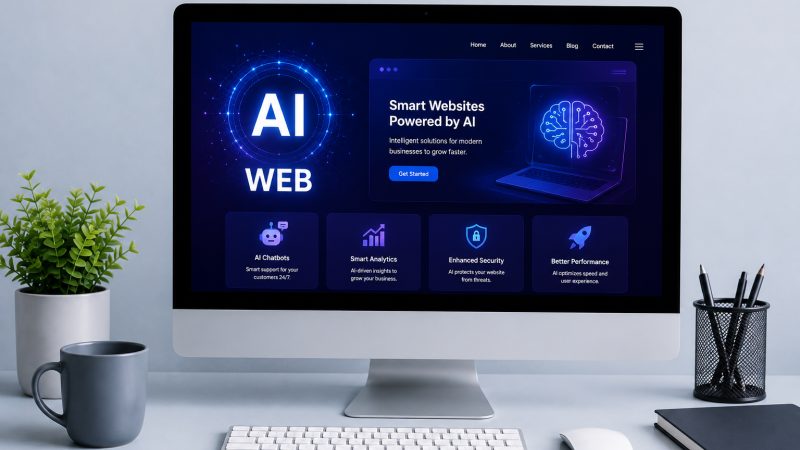
How AI is Transforming Daily Work Life
Smarter Workflows, Faster Results, and Better Productivity
Artificial Intelligence (AI) is no longer a futuristic concept used only by large technology companies. Today, AI has become a powerful tool that helps students, freelancers, businesses, designers, developers, and office professionals improve their daily work routines. From automating repetitive tasks to improving communication and decision-making, AI is changing the way people work and increasing productivity across every industry.

What is AI?
Artificial Intelligence refers to systems and tools that can perform tasks that usually require human intelligence. These tasks include learning, problem-solving, writing, designing, analyzing data, translating languages, and even generating images or videos.
Modern AI tools such as ChatGPT, Grammarly, Canva AI, Notion AI, GitHub Copilot, and many others are helping millions of people complete work faster and more efficiently.